
Engineered board: how to choose construction for underfloor heat and the project
Engineered board looks like a solid wood floor, but its service life is decided by what you cannot see after install: wear layer, core, glue line and substrate regime.
So “which board is best?” without site data has no honest answer. An apartment with underfloor heat, a large residence and a room with complex junctions need different specifications.
Below is an engineering checklist: how to read the construction, which parameters to ask the manufacturer, and what to lock before quoting price per m².
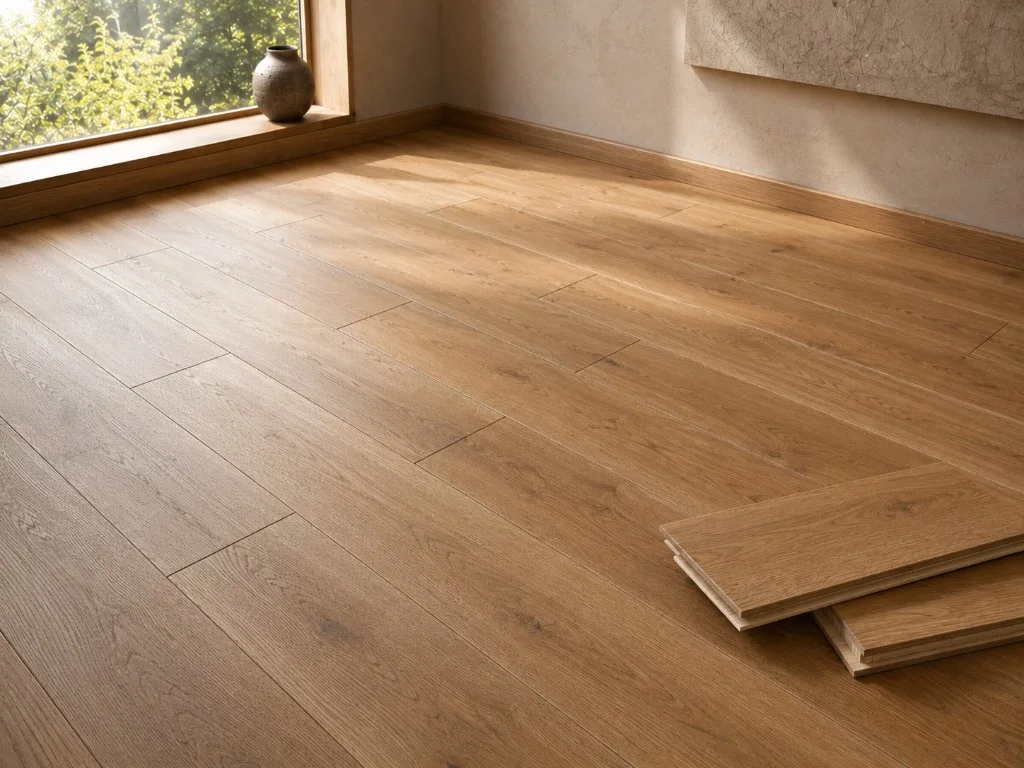
This material does not replace the method sheet of a specific heating system or a substrate report. It surfaces the questions that must appear before order — not after the batch arrives.
Commercial entry and samples — on the bespoke engineered board page. Here we cover selection logic only.
What exactly is called engineered board?
A flooring plank with a face layer of precious natural wood and a stabilising multi-layer core. Finished floors may look identical to solid; the difference is in the cross-section.
Layers are oriented to reduce width and geometry reaction to seasonal temperature and humidity swings. Stability is not invulnerability: wood still needs project microclimate, a dry substrate and correct install.
Engineered construction can ship as deck board, English herringbone, French chevron or a module. “Engineered” describes the plank build — not the laying pattern.
Two-layer or three-layer?
In a two-layer scheme the wear lamella is bonded to a stable core, often multi-ply plywood. This suits full-bond install and precise height matching with adjacent materials.
In a three-layer scheme a cross-oriented middle layer and a bottom stabiliser appear. That helps distribute internal stress, but layer count alone does not guarantee quality.
Compare not only “two vs three”, but lamella species and thickness, core material, glue quality, tongue-and-groove geometry, allowed format and rated operating regime.
Wear layer matters more than total thickness
Buyers often see only total plank thickness. For future refinishing, the precious wear layer above the core — and the real reserve to the tongue — matters more.
In Cardinal Hall projects the wear layer is usually specified in the 4–6 mm range, but the final value is locked in the specification. Format, species, pattern and underfloor-heat requirements can change the decision.
You cannot promise sanding cycles from a catalogue number alone. Before restoration, remaining lamella is measured; see parquet and engineered board restoration.
Engineered board and underfloor heating
Multi-layer construction usually takes temperature cycles better than a wide solid board. But “suitable for underfloor heat” without a method sheet guarantees nothing.
Check total thermal resistance of covering and install layers, system datasheet, screed moisture and strength, adhesive type, max surface temperature and stepped start-up.
A common industry guide for wood floor surface is not above 27 °C, but written limits from board, adhesive and heating manufacturers always win. Commissioning after install is stepped — no thermal shock.
Plywood, lamellae or HDF: a name does not replace a datasheet
Moisture-resistant birch plywood is valued for cross structure and clear tongue mechanics. Cross timber lamellae appear in three-layer builds. HDF appears in serial products with their own calculated system.
Do not choose a core by forum ranking alone. Density and grade, glue quality, emissions, water resistance, batch stability and manufacturer limits matter.
Ask for a technical sheet and a sample with an open end. If the seller shows only a pretty face without section and install map, the specification is not ready.
Species, grading and format
Oak is a universal base. Ash is more active in figure; walnut deeper in contrast. Exotic species need separate stability and heating-compatibility checks.
Select is a calm field, Nature keeps natural variation, Rustic emphasises knots and contrast. Grading names are not equal across makers — agree a physical reference.
Wide and long boards calm a room visually but raise demands on humidity, substrate and stability. Herringbone and chevron need especially precise angles and sizes.
Surface: oil, lacquer, brushing and tint
Oil keeps tactility and local refresh; lacquer forms a closed film — spot repair is harder to hide. Brushing lifts soft fibres and changes how wear reads. Tint is approved on a same-grade sample in site light.
Install: on screed or on plywood?
Full bond reduces voids and helps heat transfer but needs a substrate in tolerance. Modern card — elastic adhesive on prepared screed. Traditional — plywood when needed for compensation, height or a project node.
Full sequence — in parquet and engineered board installation.
How to read price per m²
Engineered board price depends on more than species: lamella yield, grading, wear layer, width and length, pattern, bevel, finish, batch volume and install complexity.
Compare offers only on the same specification. Split material, prep, finish, logistics, substrate and install in the estimate.
Checklist before signing the specification
Ask for: surface and open-end samples; two thicknesses — total and wear; heating compatibility datasheet; allowed formats; grading reference; tongue scheme; adhesive and substrate map; care rules.
Give the maker: plans, area and laying direction, underfloor system, finished levels, substrate type, climate regime and adjacent wood products.
If the floor must match kitchen, doors or panels, reserve one batch before launch — see one timber batch.
In brief
How does engineered board differ from parquet board?
Is engineered board suitable for underfloor heating?
Which engineered board thickness is better?
Is two-layer or three-layer more stable?
Can engineered board be laid straight on screed?
How many times can engineered board be sanded?
Oil or lacquer for the surface?
What drives bespoke engineered board price?
Need a site diagnosis — describe the floor or joinery.
Request a quote