
Installation of panels and boiserie
Cardinal Hall · Installation
Stable panel and boiserie installation: unified layout, precise junctions and predictable wall geometry.
- Colour and grain — one batch; agreed on a sample in your lighting.
- Joints to floor, skirting and architraves — one profile, no steps.
- Seasonal gaps in the nodes; care guide and service adjustment after handover.
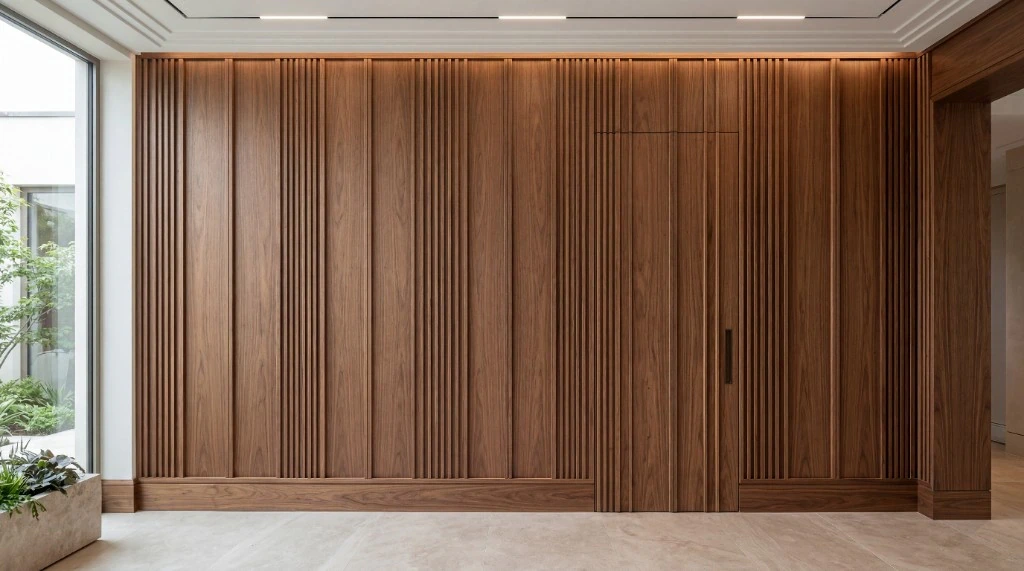
Our installation principles
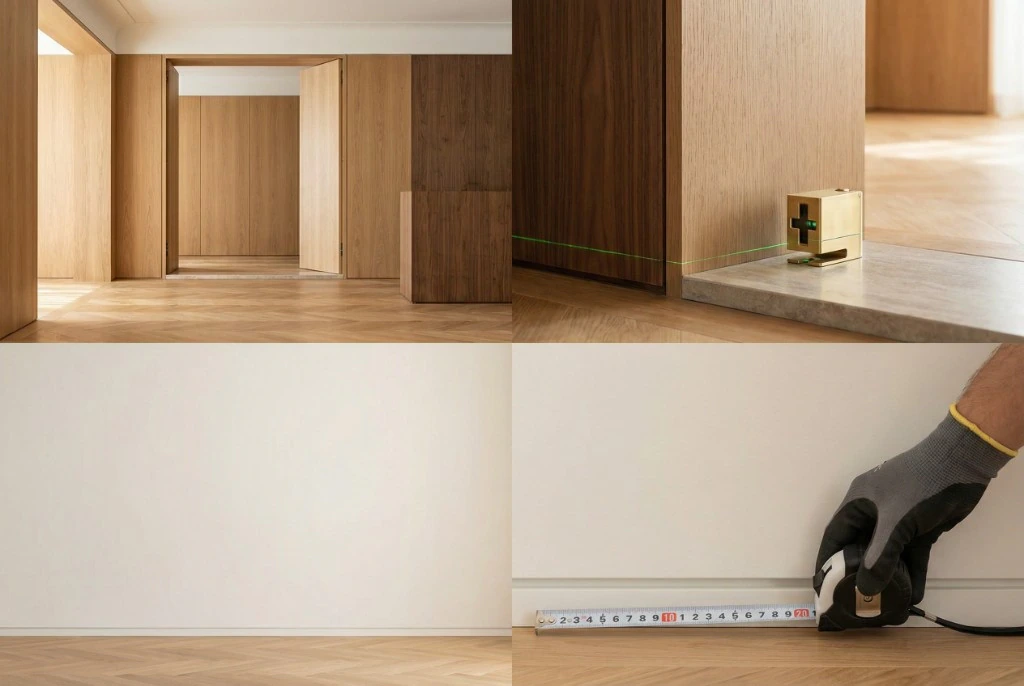
Substrate and datum zero
Substrate check and datum zero — base for clean junctions.
Moisture under control
Substrate and material moisture within tolerance before start.
Specification for the project
Method, adhesive and finish protection matched to the site.
Handover with guidelines
Geometry check, junctions and operating instructions.
Installation of panels and boiserie
Stages
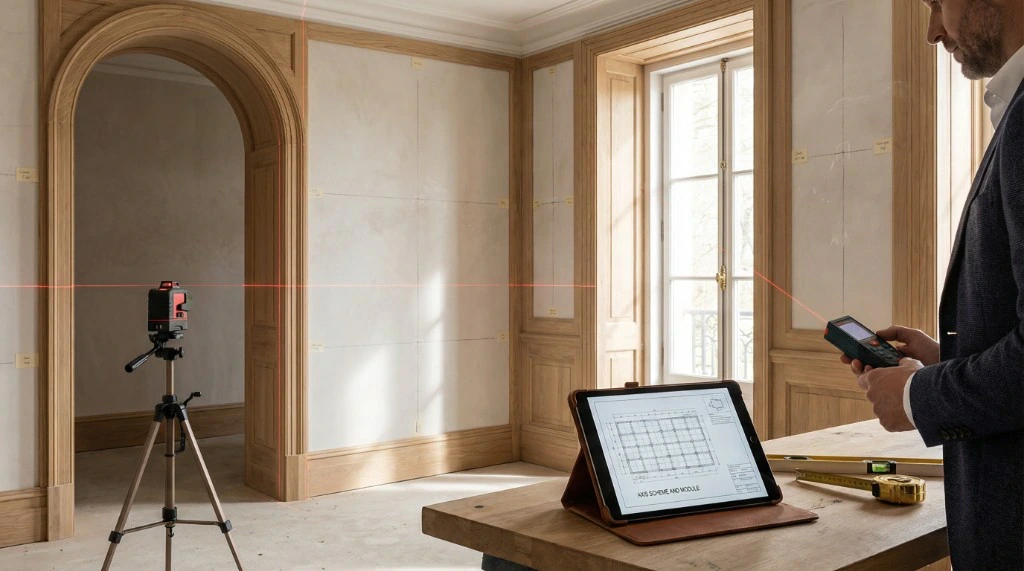
Axial layout and module
Before installation we build a layout grid on main room axes: fields tied to doors, corners, window piers and furniture focal points. This avoids visual drift and random infill strips.
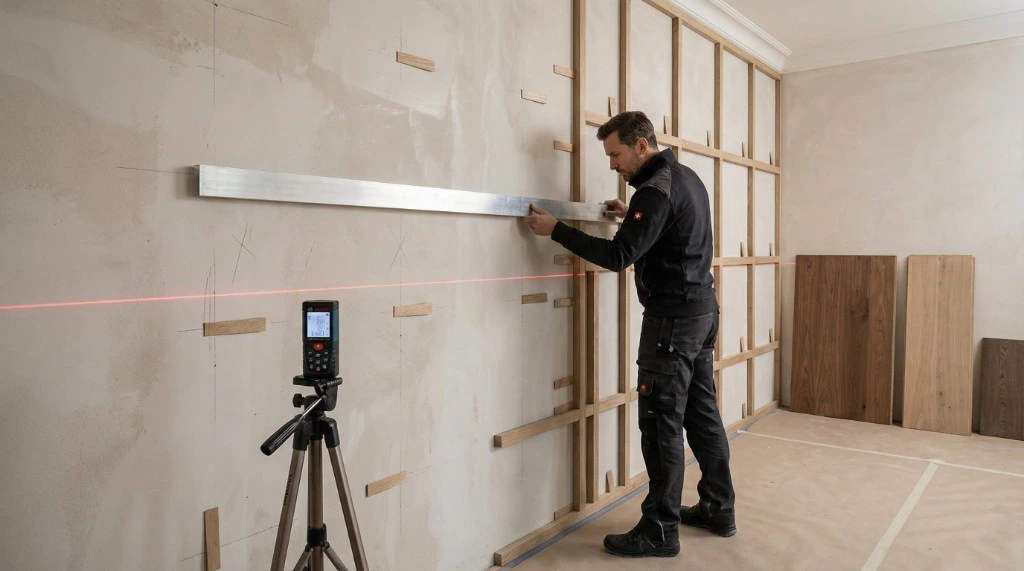
Wall and plane preparation
We check walls for plumb and flatness, add substructure and packers where needed. The substrate must be dry and stable or panels may move after a season.
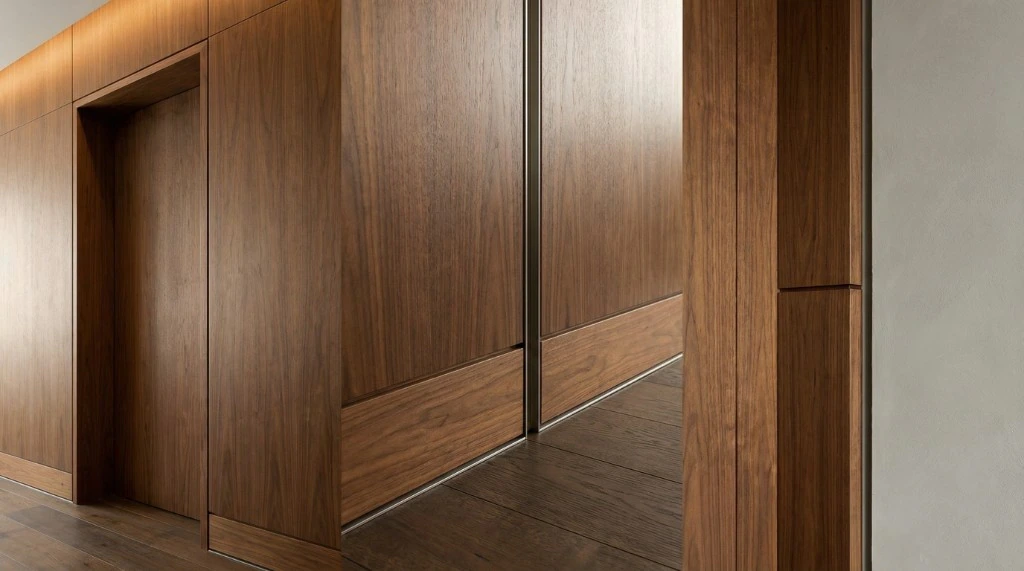
Technical gaps and stability
For wood and veneer we allow working compensation at perimeters and junctions. This reduces pinching, seam cracks and movement with temperature and humidity.
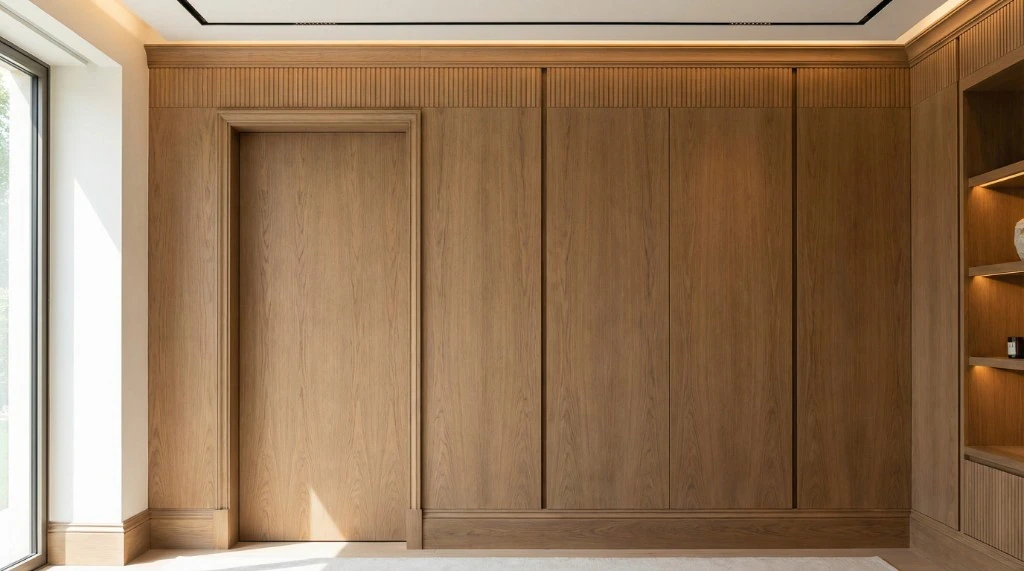
Integration with doors, moldings and lighting
We align panels with door leaves, portals, cornices and skirting in one profile line. Layout lines match door axes and integrated lighting.