
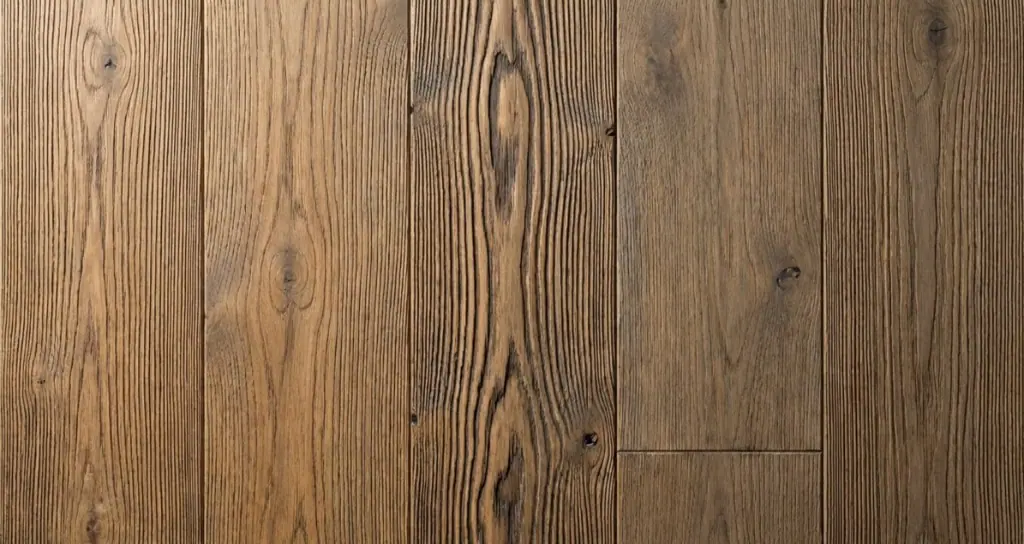
Brushing
Рельефная фактура — мягкие волокна сняты, годовые кольца выступают.
Urgent:8(800)550-2336
Craft and benefits
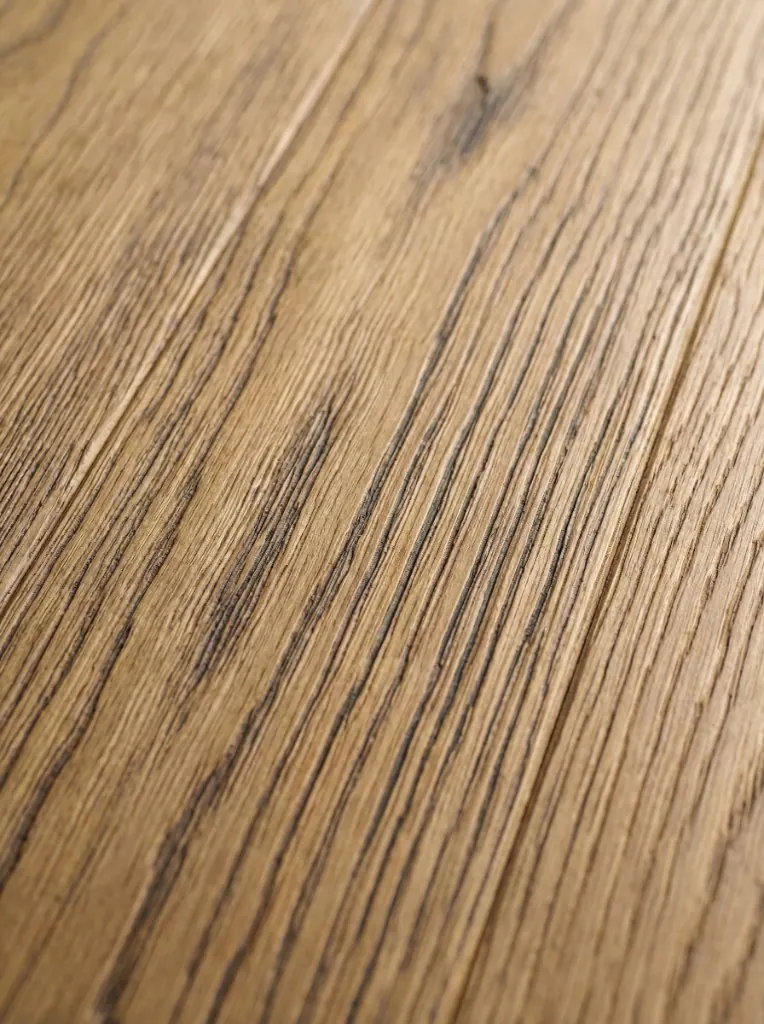
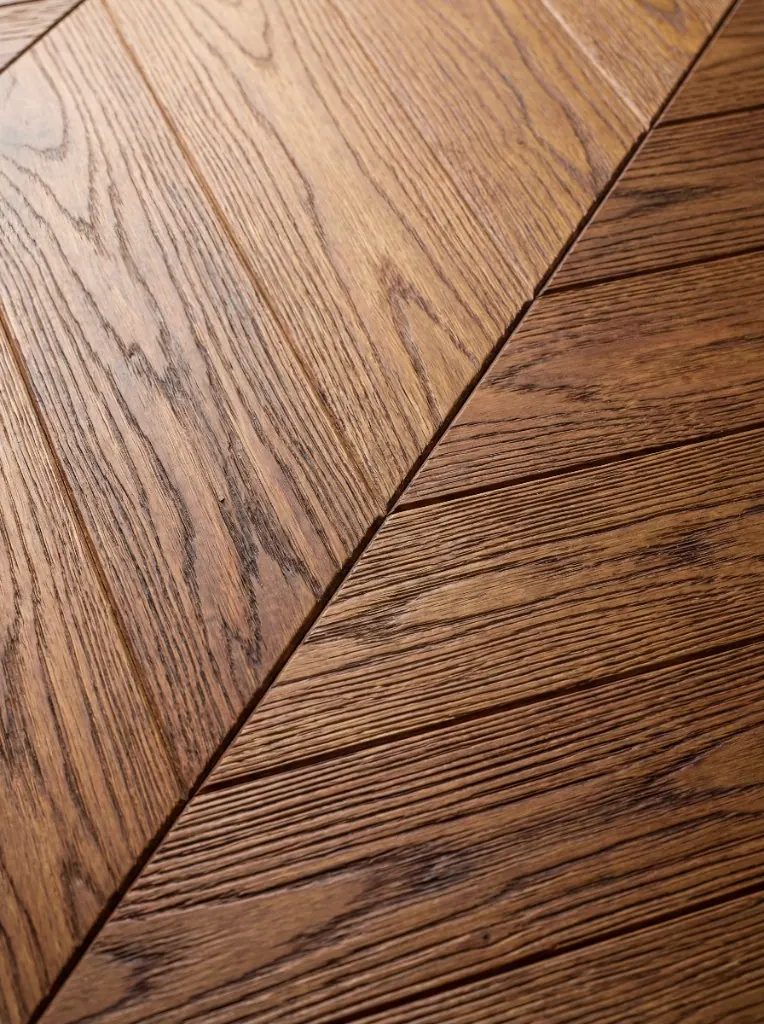
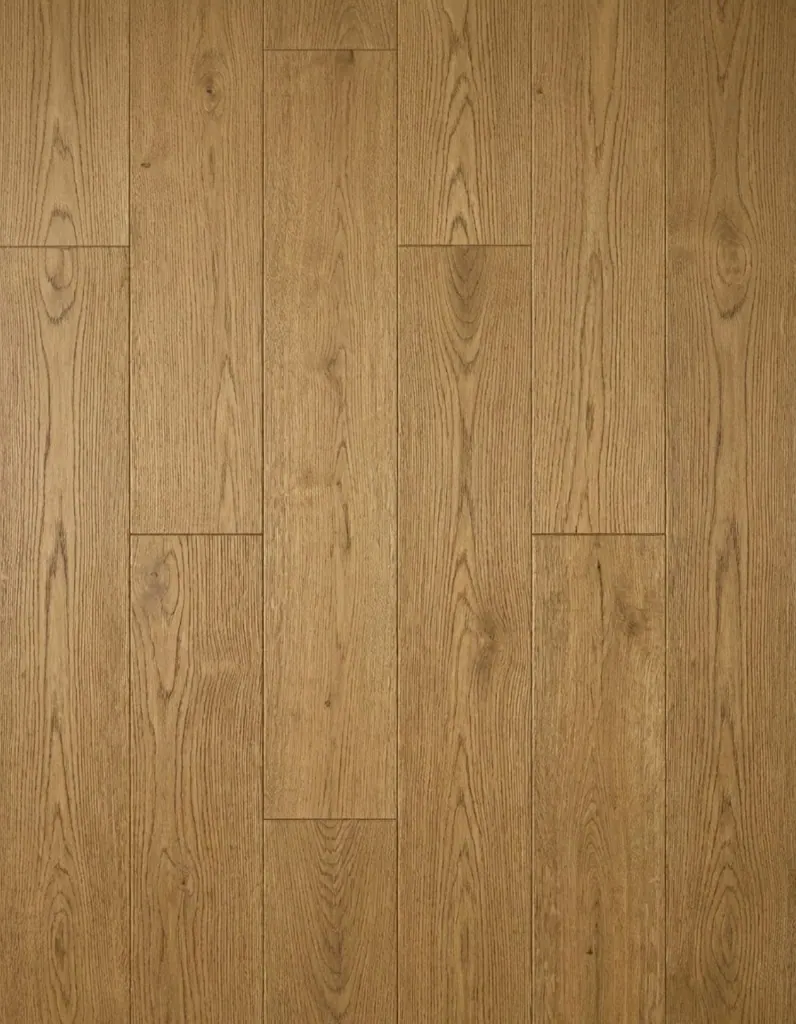
Brushing selectively removes soft wood fibers with brushes, leaving the growth ring relief so the floor gains visible and tactile depth. It shows best on oak, ash, larch, and walnut. Often combined with tinting: pigment sits in the grooves and adds extra depth and character.
How it works
Brushing uses metal or synthetic brushes to remove soft fibers; the harder annual ring layers remain, typically to 1–3 mm depth. The result is a relief that makes the floor more expressive to the eye and touch. Best effect is on species with contrasting structure: oak, ash, larch, walnut. After brushing, the floor is finished with oil or lacquer; it is often combined with tinting—pigment in the grooves and lighter ridges enhance depth. Light brushing adds subtle texture; deep brushing gives a strong 3D effect.
Properties
Key properties and where it fits
01
Volumetric growth ring relief, visible and tactile
02
Ideal for oak, ash, larch, walnut
03
Pairs well with tinting for greater depth
04
Distinctive floor without sacrificing durability