
Installation of kitchens and built-in furniture
Cardinal Hall · Installation
Stable kitchen and built-in installation: accurate geometry, quiet hardware and reliable load-bearing nodes.
Urgent:8(800)550-2336
WarrantyTerms and coverage are set out in the contract: up to 25 years on in-house manufactured items and up to 2 years on installation — subject to proper operating conditions.
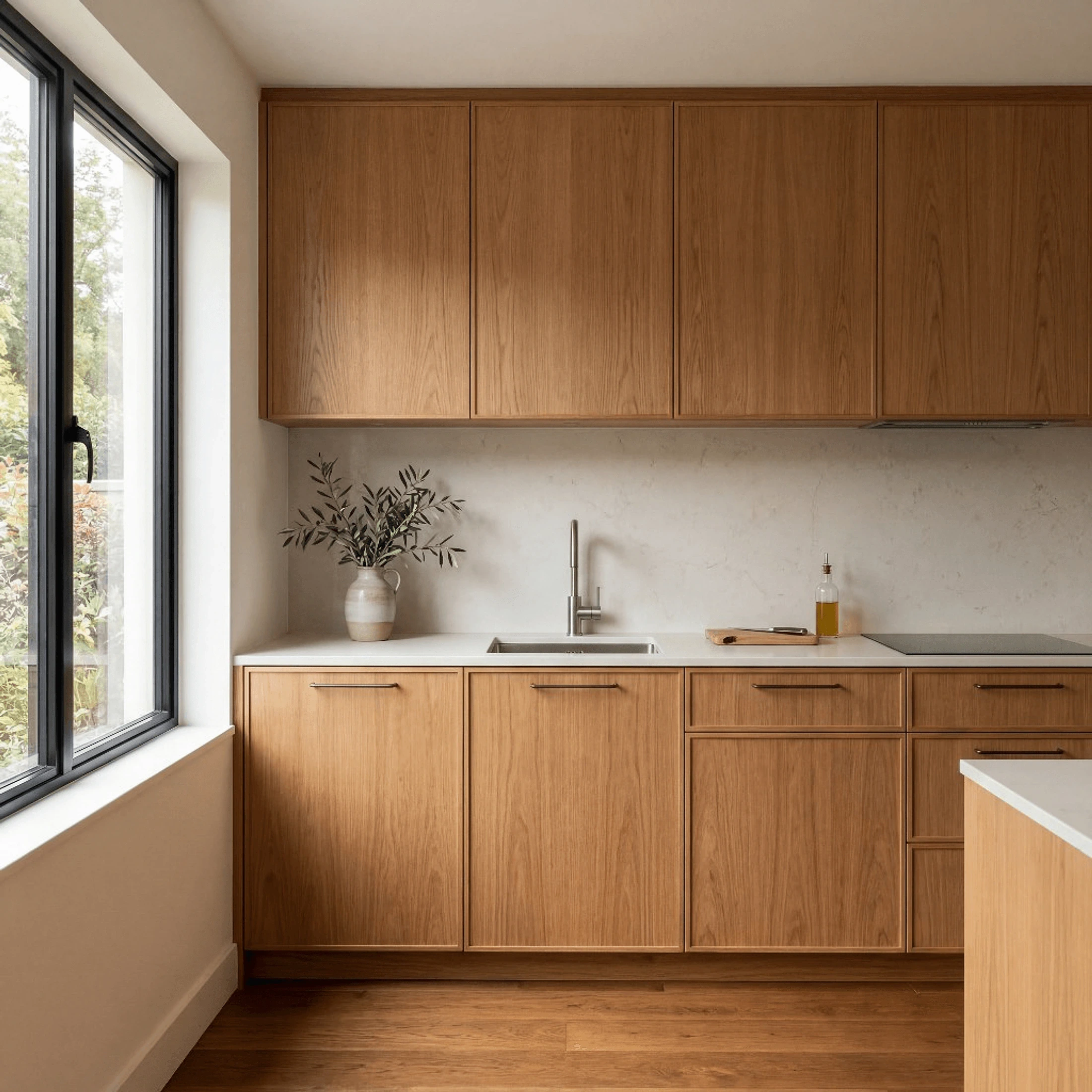
Our installation principles
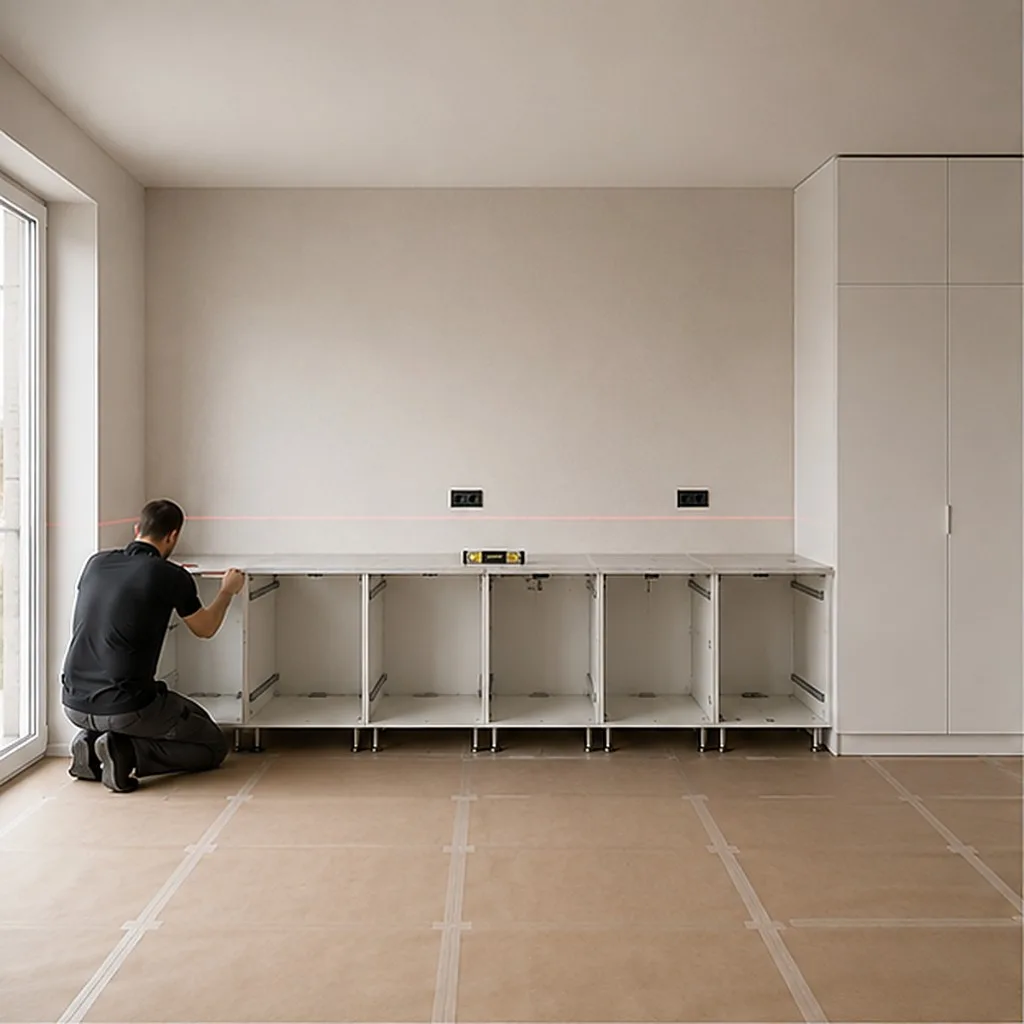
Principle 1: Substrate and datum "zero"
Every installation starts with assessing substrate density and flatness and establishing datum zero. Without this, stable junctions and correct node behavior are impossible.
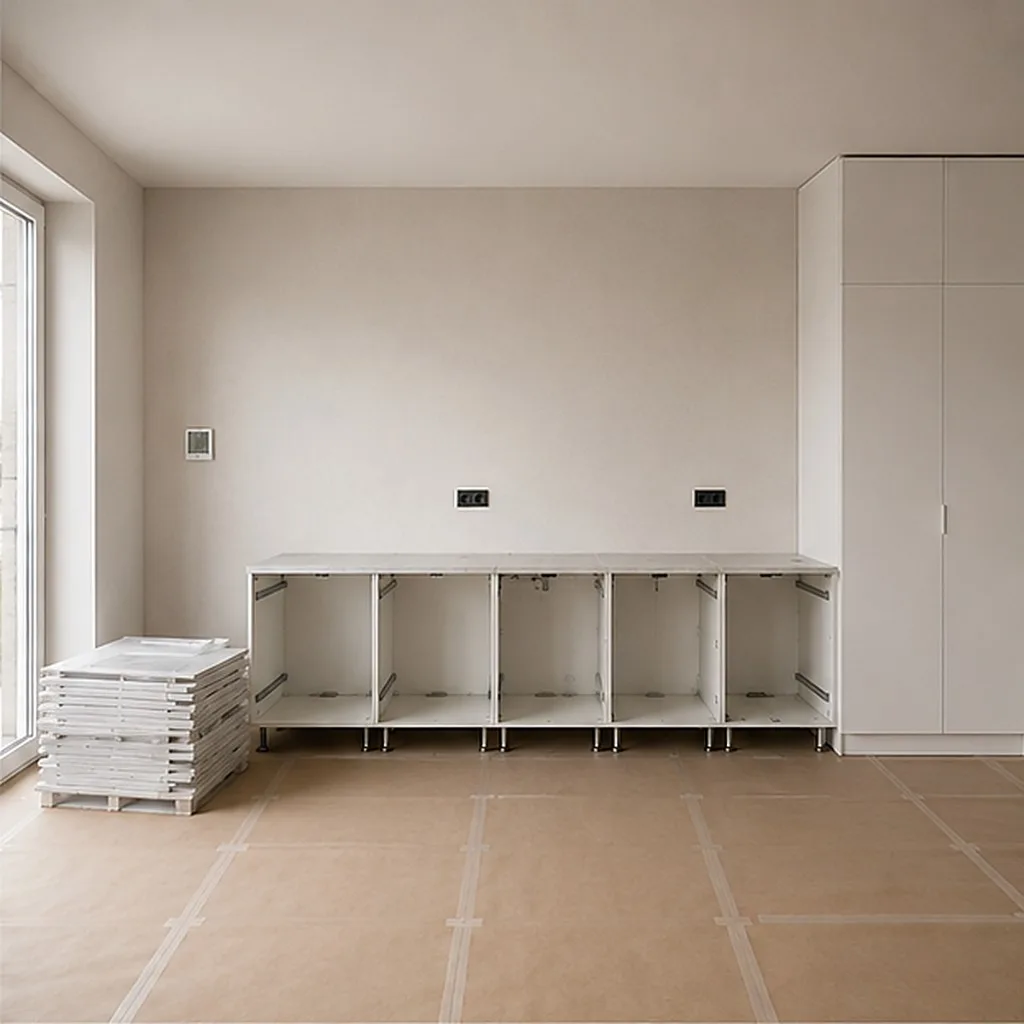
Principle 2: Moisture under control
We control substrate and material moisture before work begins. This reduces the risk of deformation, squeaks and joint opening after handover.
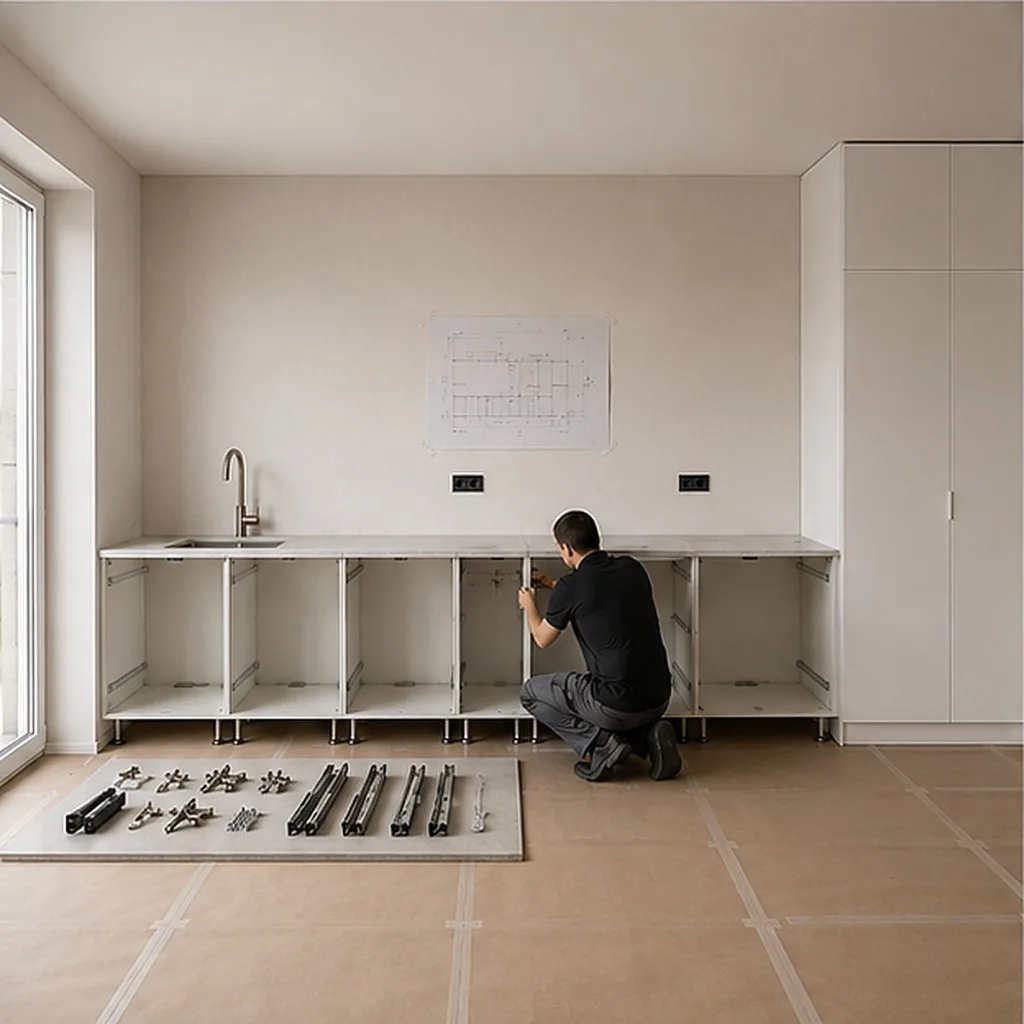
Principle 3: Specification for the project
We choose installation technology by project type and loads: operation sequence, adhesive type, layering, moisture barrier and finish protection.
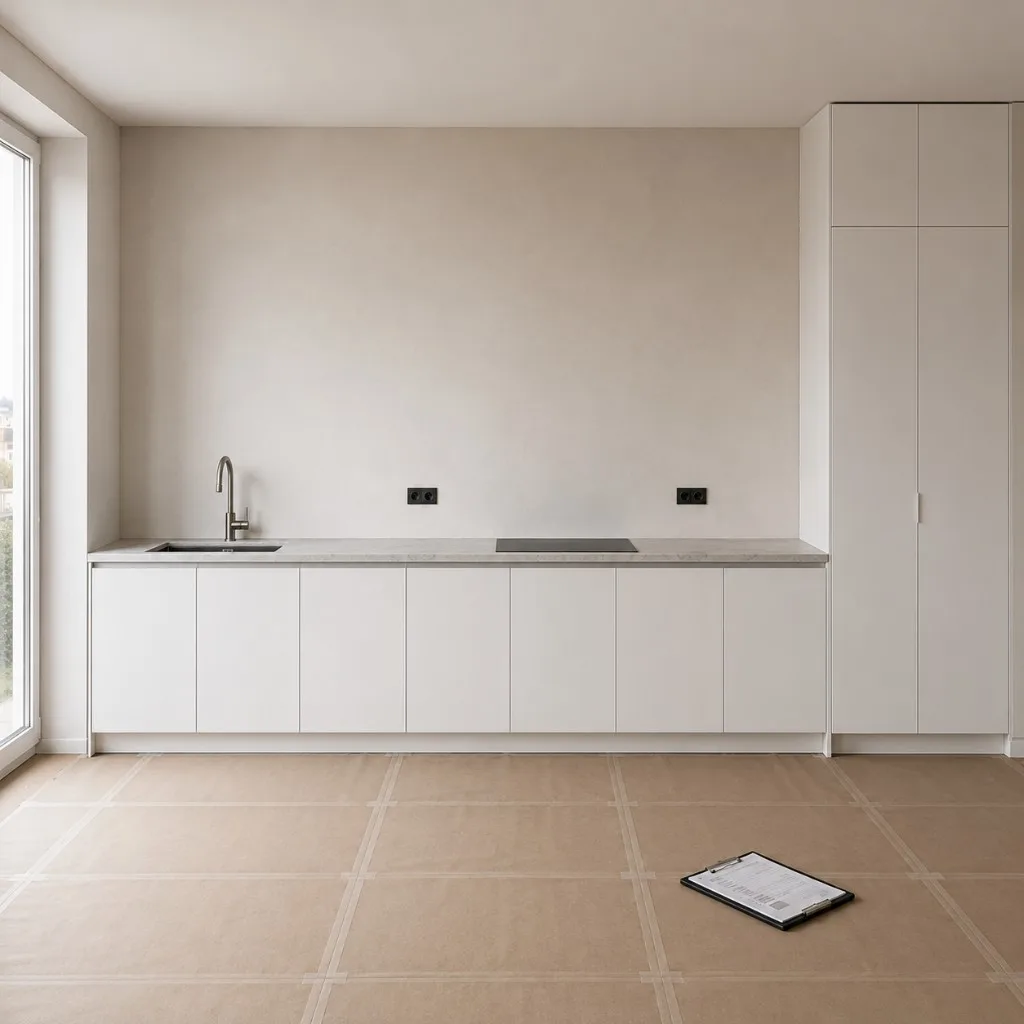
Principle 4: Handover with a care regime
After installation we check geometry and junctions, provide operating guidelines and perform service adjustments when needed.
Installation of kitchens and built-in furniture
Stages
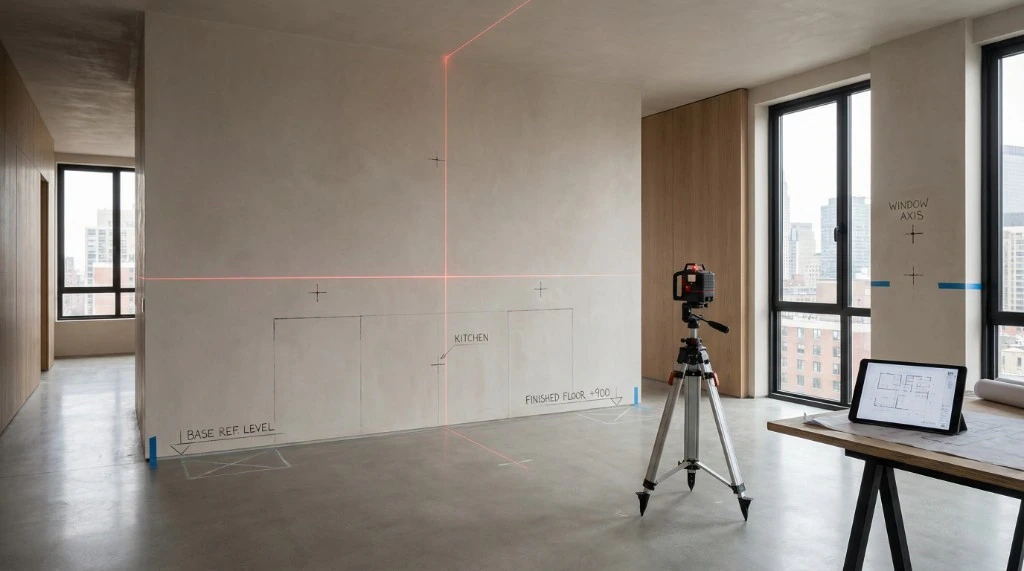
Base levels and room ties
We set reference lines to actual floor level, check wall and ceiling deviations, note window and door axes and appliance connections. This is the base for a straight facade line.
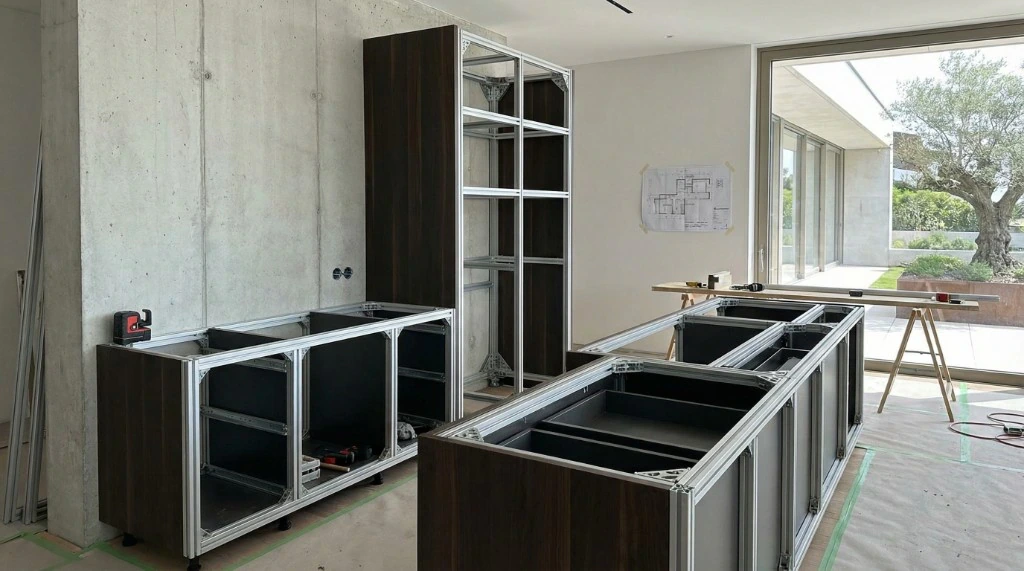
Carcasses and structural nodes
We assemble carcasses checking diagonals and stiffness, reinforce load zones (sink, cooktop, tall units, built-in appliances). We verify fixings and stability under working load.
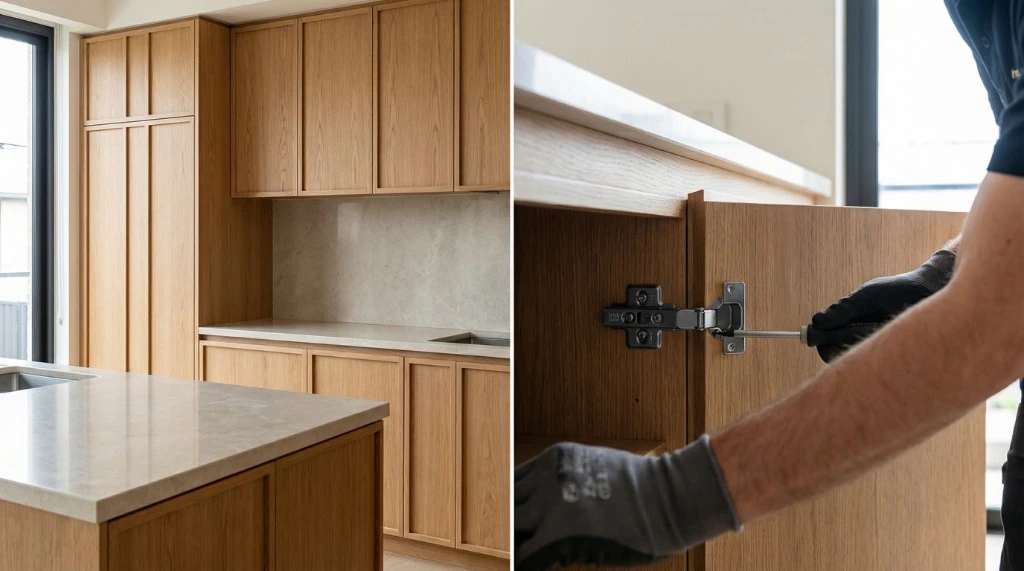
Facades, gaps and mechanics
We align facades to one plane and even gaps, adjust hinges, runners and closers through full opening range. Soft, quiet operation without twist.
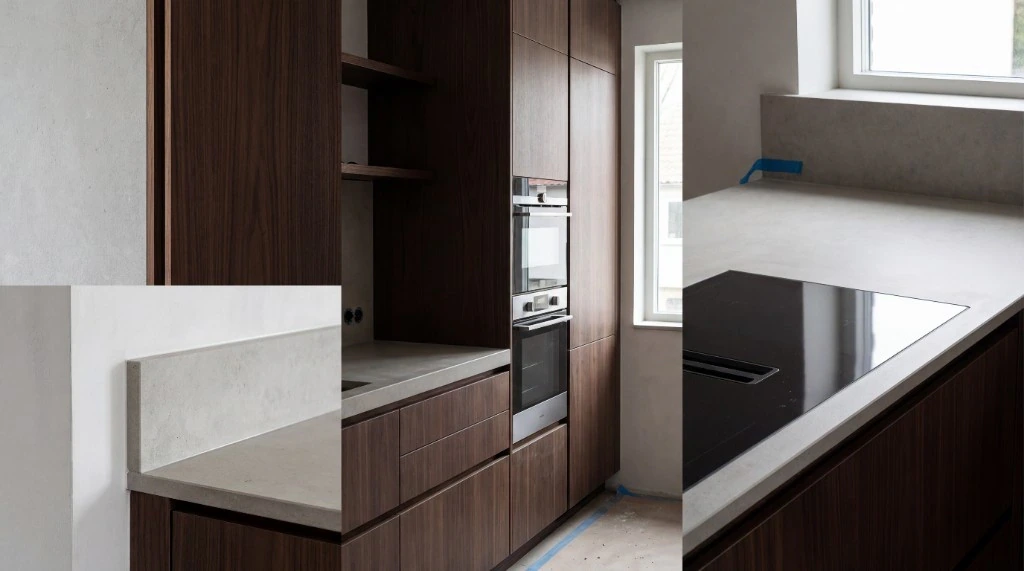
Technical gaps and junctions
We allow service gaps at walls, worktop, splashback and built-in appliances. This prevents pinching, rubbing and seasonal deformation.
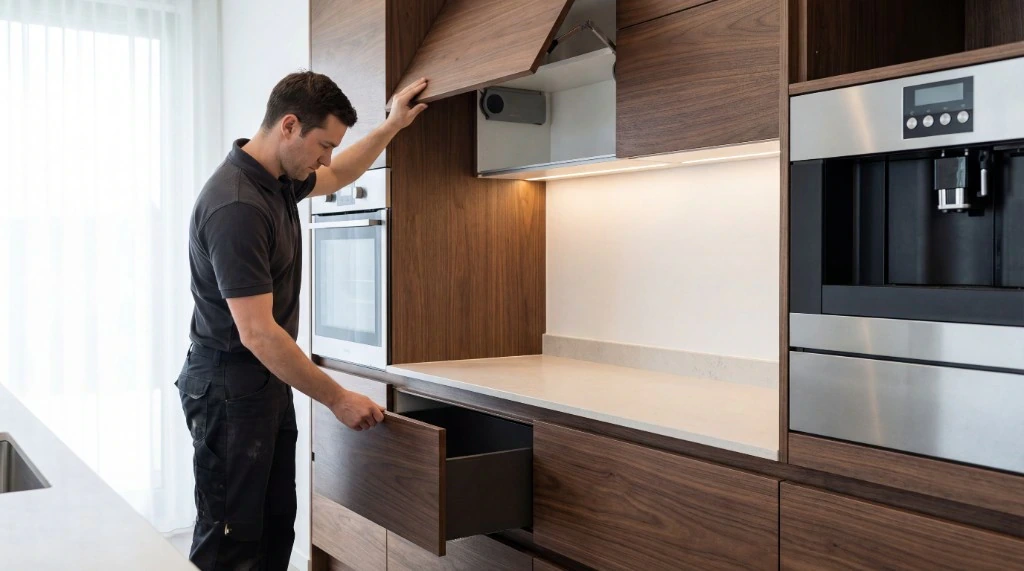
Final check and handover
We test real use: module opening, drawer travel, lift systems, junctions and edges. We hand over care and service adjustment guidelines.
- One facade line and stable gaps across the run.
- Correct hinges, runners, closers and lift systems.
- Rigid, safe nodes in load zones (appliances, sink, tall units).
- Compensation gaps to walls, worktop and appliances.
- Use-case checks before handover.
WarrantyTerms and coverage are set out in the contract: up to 25 years on in-house manufactured items and up to 2 years on installation — subject to proper operating conditions.
Discuss kitchen and furniture installation
Send drawings and dimensions — we will prepare an installation and final adjustment plan.
Request consultationInstallation FAQ
Subfloor, moisture, method, supervision
What is included in turnkey parquet installation?
Subfloor prep (≤2 mm / 2 m), acclimation, laying by method sheet, sanding, oil or lacquer, skirtings. Indoor humidity 40–60%. Moscow region and Russia-wide.
Do you install third-party products?
Priority is Cardinal Hall manufacture for geometry and joints. Third-party after compatibility audit.
Which parquet laying methods do you use?
Traditional (plywood + PU), modern (silane, no plywood), historic (joists) and artistic (modules/pattern) — locked in the project method sheet.
Do one crew install kitchens, doors, stairs and panels?
Yes — one crew covers parquet, kitchens, doors, stairs and boiserie with shared junctions and contract deadlines.
Where do I book survey and installation?
Showroom Casa Ricca Expo, Rublyovskoye sh. 52A, pavilion 323, Moscow. Quote: contacts#quote. Install across Russia and abroad by schedule.
What is Cardinal Hall's single-batch wood concept?
One wood lot for the entire interior — floor, doors, kitchen, stairs — identical tone for decades.
How long does Cardinal Hall dry timber?
280 days of chamber and thermobaric drying. 6–8% moisture, ±0.5 mm geometry.
What warranty does Cardinal Hall offer?
25 years on products, 2 years on installation.